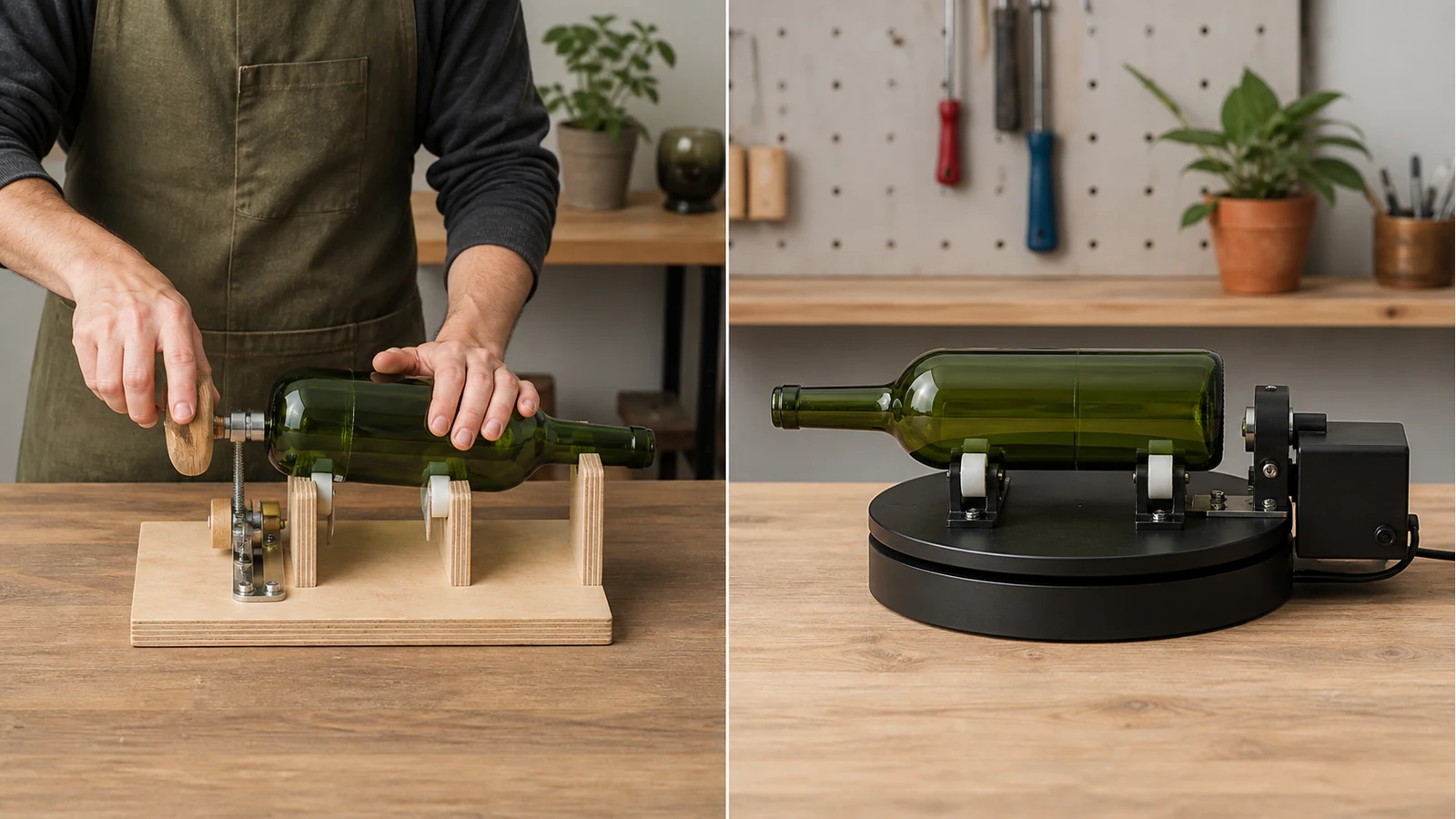
Manual Score And Heat Vs Electric Bottle Cutter Uk
Direct answer: a manual score-and-heat cutter is the cheaper entry point for occasional UK bottle projects, while an electric bottle cutter is mainly about steadier rotation, less hand fatigue and better repeatability when you cut more than a few bottles. Neither option removes the need for safe separation, sanding and practice.
The real difference is control, not magic
Manual jigs ask your hands to keep the bottle steady while the scoring wheel stays aligned. That can work well with patience, but fatigue and uneven pressure show up quickly when you repeat the same cut. Motorised or powered designs put more of the rotation burden on the machine. The public Alibaba SmartBuy guide separates manual and motorised glass bottle cutter types, which is a useful way to think about the category without treating any one tool as universal.
UK buying roundups still show many manual kit-style options. BestReviews UK lists bottle cutter options in a market still dominated by manual kits and small DIY tools, so shoppers should expect mixed listings rather than one standard product type.
Decision table
| Question | Manual score-and-heat may fit | Electric may fit |
|---|---|---|
| Bottles per month | One-off gifts or light hobby use | Repeated batches, craft fairs or regular orders |
| Hand strain | You can rotate steadily without discomfort | You want the base to do more of the repeat motion |
| Glass mix | Mostly similar wine bottles | Mixed wine, spirit or thicker bottles needing speed control |
| Budget | You want the lowest-cost learning route | You can justify a tool near the under-£100 craft-tool bracket |
| Risk tolerance | You accept more practice and thermal-shock variability | You want a more consistent score before separation |
What electric does not solve
An electric cutter does not guarantee a perfect split. The bottle still needs a clean score, careful separation and proper rim finishing. You should still follow the beginner bottle cutter safety checklist, especially around eye protection, gloves and glass cleanup.
Independent buyer guides often describe electric rotation as a consistency advantage, but that should not be read as a lab-tested success rate. TheKitchenAppliance frames electric cutters as useful for steadier bottle rotation; it is still a buying-guide claim, not proof that every bottle will separate cleanly.
Who should not upgrade yet?
Do not upgrade if you only want to make one candle holder for a weekend gift, have not practised on spare bottles, or are not willing to sand edges. Spend the first money on goggles, gloves, sandpaper and practice bottles. If the bottleneck becomes repeat scoring rather than learning the basics, then revisit powered options.
Conditional next step
If your weekly bottle count, hand fatigue or batch consistency needs point towards powered rotation, check live UK plug, warranty and speed details before buying. The ElectricGl electric glass bottle cutter page is a relevant same-site option to review once those conditions are true.