Bottle Cutter Safety Checklist Beginners Uk
Direct answer: beginners should not cut bottles without safety goggles, gloves, a clear worktop, controlled scoring, careful hot/cold separation, edge sanding and damp cleanup. If any of those are missing, pause the project rather than trying to improvise around broken glass.
Safety setup before the first score
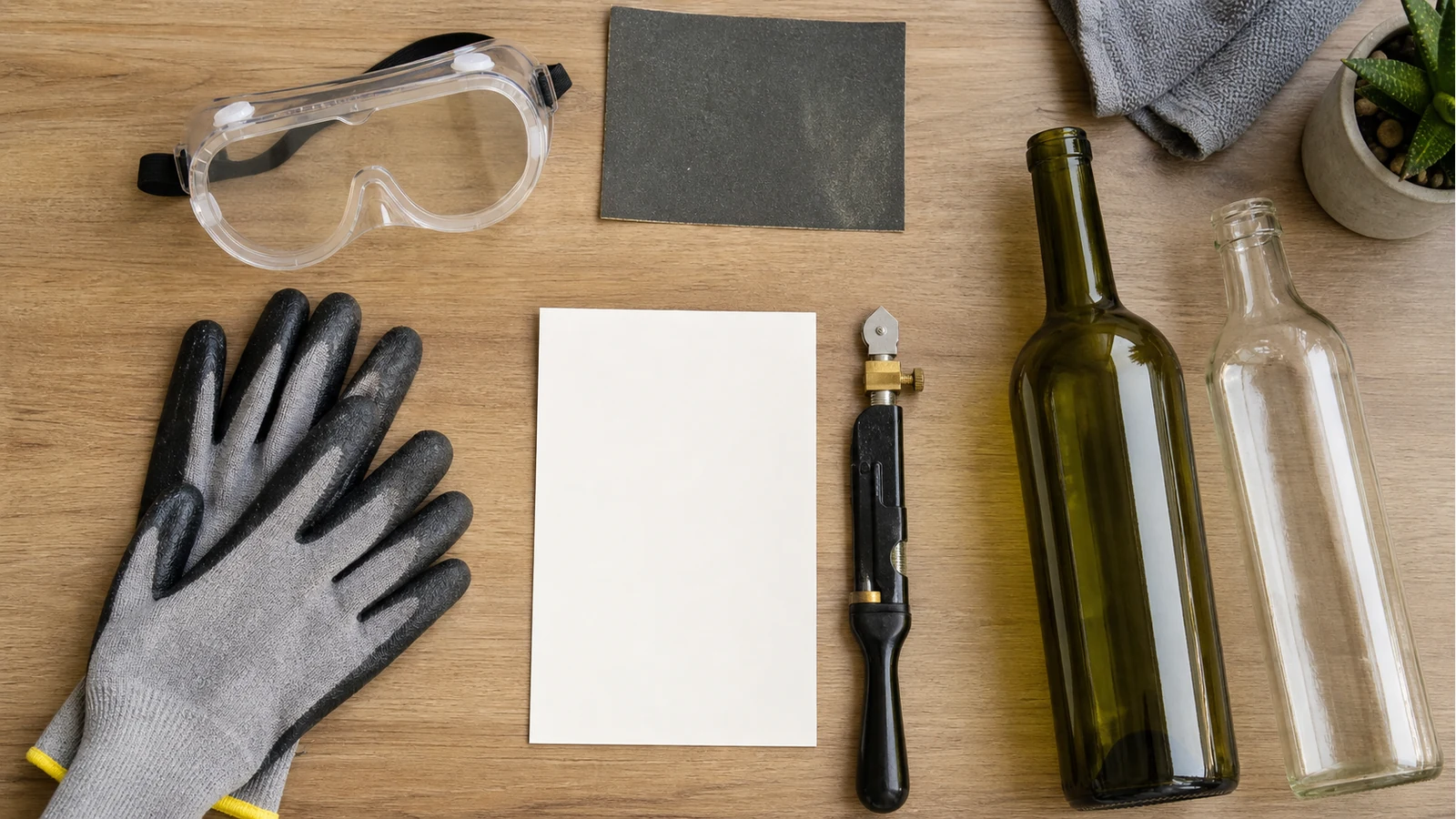
Glass bottle cutting looks simple online because the risky parts are often edited down. In practice, the first safety job is to control the work area. Use a stable surface, keep sleeves and cables away from the cut line, and remove clutter so a bottle cannot roll or knock tools onto the floor.
The Bottle Depot advises goggles, gloves, ventilation and careful glass-dust cleanup. That is the right baseline for hobby work: protect eyes first, hands second, and do not leave fine glass residue where food or children may contact it later.
Beginner checklist
- Wear safety goggles before scoring, separating or sanding.
- Use cut-resistant or sturdy work gloves when handling scored or separated glass.
- Work in a ventilated area, especially when sanding.
- Start with clean, round, label-free practice bottles.
- Score once with controlled pressure; do not grind repeatedly in the same groove.
- Use hot and cold water slowly, keeping the bottle pointed away from your face.
- Sand the full rim until it feels smooth inside and outside.
- Clean the bench with a damp disposable towel or controlled vacuum method suitable for fine debris.
Stop conditions
Stop if you do not have eye protection, if an under-18 is attempting the work unsupervised, if the bottle has cracked unpredictably, or if you feel rushed. Also stop before candle use if the rim catches on cloth, paper or skin. A decorative project is not worth continuing with an unfinished edge.
UK craft sellers echo similar boundaries. Salvage Sister presents bottle cutting as adult craft work with eye protection and gloves, while Dainty Dress Diaries emphasises gloves, goggles, a mask and practice bottles in a DIY context.
Where powered stability fits
A powered cutter may reduce the amount of hand rotation needed, but it does not make the task risk-free. If you later compare powered tools, use this same checklist as the minimum setup, then read the UK plug and marking checks for bottle cutter buyers before ordering anything electrical.
Proceed or pause?
Proceed only when you can complete the whole chain: protect, score, separate, sand and clean. Pause if you only have the cutter but not the safety gear, or if you are hoping sanding can be skipped. The smooth edge is part of the project, not an optional polish at the end.