Electric vs manual bottle cutter: consider a documented manual kit first for occasional candle-holder projects
For occasional candle-holder projects, consider a manual score-and-heat kit first if its documented process suits your bottles and you are willing to complete the separation and finishing work. Investigate powered equipment when you can identify a recurring task you want it to address. This is our proposed buying approach, rather than a finding from comparative testing.
Which approach suits occasional candle-holder projects?
For occasional candle-holder projects, consider a manual score-and-heat kit first if its documented process suits your bottles and you are willing to complete the separation and finishing work. Investigate powered equipment when you can identify a recurring task you want it to address. This is our proposed buying approach, rather than a finding from comparative testing.
When weighing up an electric vs manual bottle cutter, start with the complete project: preparation, separation or cutting, additional supplies, rim finishing and putting the equipment away. For occasional use, we recommend choosing only after you can explain why the equipment and its required work suit your plans. For recurring projects, identify what you want to change before investigating an upgrade.
The evidence here is uneven. A distributor-hosted instruction sheet provides a limited reference for manual scoring and thermal separation, but it has not been reliably matched to a named manual purchase option. ElectricGl’s own pages describe its powered product. These sources support a bounded workflow comparison, without establishing which option costs less overall, finishes a project faster or produces fewer failed bottles.
Keep the equipment decision separate from the decision to use the finished object as a candle holder. Neither the workflow descriptions nor the listed accessories provide validation of candle-holder suitability. A completed cut and a dressed rim leave that intended-use question unresolved.
Scoring and thermal separation versus mechanical cutting
The decision-relevant difference is how the bottle is separated: the manual reference describes scoring followed by heating and cooling; ElectricGl describes contact with a motor-driven cutting disc. Compare the work around those stages as well as the cutting action.
The instruction sheet hosted by Swart Glass, reviewed on 10 November 2026, carries a Creator’s Stained Glass attribution. It describes completing a score around the bottle, followed by a separate thermal-shock stage using heat and cold to separate the glass. This supports explaining the distinction between scoring and separation in that document. Its extracted product title is unreadable, so it cannot establish the instructions for a particular manual kit offered for sale.
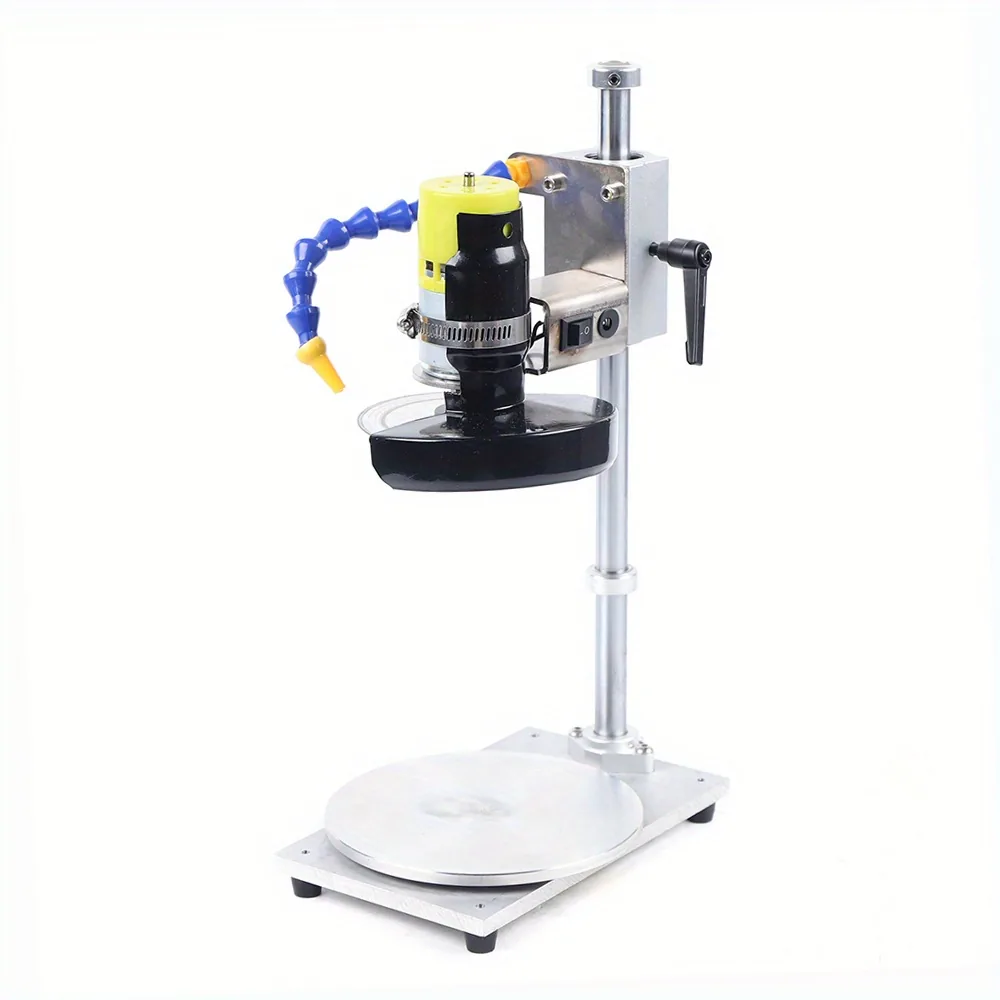
The ElectricGl homepage, reviewed on 10 November 2026, describes placing the bottle on a rotating rest and turning it against a motor-driven disc with water at the cut. It then describes using a grinding rod to dress the edge. These are the seller’s descriptions of its workflow.
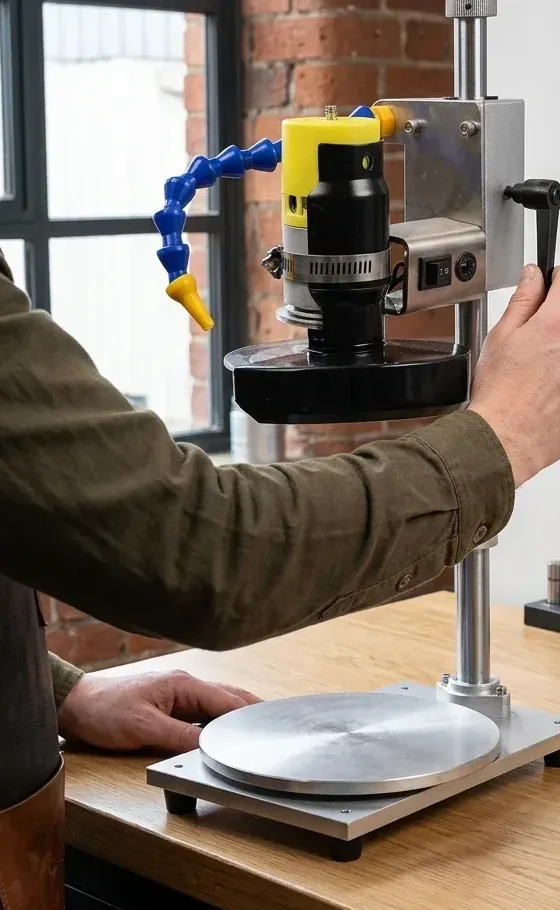
For choosing equipment, ask to see the selected model’s complete process on representative bottles. For a manual kit, verify its own scoring and separation instructions. For a powered cutter, verify its cutting, preparation and finishing requirements. The descriptions here are a comparison of stages; obtain the applicable manufacturer instructions before operating either option.
Compare the work across the whole project
Compare both options against the same project stages. Use the table to identify what is documented and what you still need to confirm before buying.
The manual column refers only to the Creator’s-attributed instruction sheet, reviewed on 10 November 2026. It is a distributor-hosted process reference, not a verified specification for a named manual kit. The ElectricGl column uses its homepage and product page, reviewed on the same date.
| Decision criterion | Manual score-and-heat kit | ElectricGl Electric Glass Bottle Cutter |
|---|---|---|
| Process | The reference sheet describes a score followed by thermal separation using heat and cold. Verify the selected kit’s own method. | The seller describes turning the bottle against a motor-driven disc with water at the cut. |
| Preparation | The reference sheet describes positioning a cutting module and placing the bottle on rollers. Requirements for a selected purchase option remain unverified. | The seller describes bench placement, fitting a disc and water tube, setting the height and placing the bottle on a rotating rest. |
| Included equipment | Unknown for a selected model; an item mentioned in instructions is not necessarily included. | The product page lists the cutter, a UK 7-speed adapter, three 60 mm discs, five hex keys, a chuck key, a 1 m water tube, a hole saw and a grinding rod. |
| Additional supplies | Obtain the model’s contents list and instructions before making a purchase list. | The product page excludes eye protection; the homepage excludes sandpaper. |
| Rim finishing | The supplied manual reference does not establish a finishing procedure. Obtain model-specific guidance. | The homepage describes dressing the edge with the grinding rod after cutting. A complete finishing procedure for your object remains unverified. |
| Occasional use | Proposed criterion: would you accept the documented preparation, separation and finishing work each time? | Proposed criterion: what specific need would justify choosing powered equipment for these projects? |
| Recurring use | Proposed criterion: identify any stage of your current process that you want to change. | Proposed criterion: request a demonstration addressing that stage, including preparation and finishing. |
| Bottle accommodation | Unknown for a selected model; check the actual bottles and intended cut position. | The product FAQ describes glass wine and spirit bottles, and ceramic bottles that sit on the rotating rest under the head. Confirm your particular bottles. |
| Evidence limits | The manual reference is not reliably matched to a named purchase option. | Seller descriptions establish what the seller states, without demonstrating a comparative advantage. |
As a proposed comparison exercise, make a separate list for each option of items to buy, tasks to prepare and work remaining after separation or cutting. Consider how often you expect to repeat that work. Leave total cost and performance differences unknown until you have comparable information; do not treat a longer accessory list as proof of a better investment.
When to investigate a powered cutter
A recurring project or a clearly identified limitation is a reason to investigate powered equipment. It does not establish that an upgrade will be worthwhile. We suggest starting with a short statement of what you want to change, then asking for evidence relevant to that need.
For example, you might want to assess the work involved in separation, bottle positioning or preparation between projects. These are proposed investigation topics, not documented shortcomings of manual equipment. If finishing is your concern, request a separate demonstration of that stage rather than assuming a different cutting method will resolve it.
Before buying, define what would make the change useful to you:
- Identify the particular bottles and cut positions you intend to use.
- Ask for a demonstration of the exact model covering preparation, cutting or separation, and finishing.
- Compare the operator work with your current documented process.
- Decide what evidence you would need before accepting a claim about time, failed bottles, accuracy or running costs.
For ElectricGl specifically, the product FAQ, reviewed on 10 November 2026, describes suitable bottles as “Glass wine and spirit bottles, and ceramic bottles that sit on the rotating rest under the head.” This wording does not establish numerical fit limits or a fit advantage over a manual kit. Request confirmation for your bottles and marked cut line.
There is no proposed production threshold or financial break-even point here. For occasional projects, our recommendation is to consider a documented manual option first. For recurring work, investigate a powered option against the problem you have identified, while leaving any performance advantage unproven.
What to check before choosing either option
Before choosing either option, obtain instructions identifying the exact model and verify accommodation of your intended bottles and cut positions. We recommend sending the supplier photographs, bottle measurements and a marked proposed cut line so that the answers address your project.
For a manual kit, ask which manufacturer document covers positioning, scoring, separation and finishing. For powered equipment, request the applicable preparation, operation and finishing instructions, including the manufacturer’s requirements for electrical and water arrangements. Avoid substituting another model’s guidance where the selected equipment’s documentation is unavailable.
Use this proposed merchant verification checklist. The questions identify unresolved information; they are not confirmed specifications, operating directions or purchase entitlements.
| Check | Question to send to the merchant |
|---|---|
| Model identity | Which exact model will be supplied, and which manufacturer instructions apply to it? |
| Bottle shape and dimensions | Will the bottles shown in my photographs fit and remain supported? Which dimensions and shape restrictions must I check? |
| Intended cut position | Can this model reach the marked line? Please provide the relevant limits and explain how to measure them. |
| Preparation and additional supplies | Which tools, protective items and other supplies do the instructions require, and which are included? |
| Powered equipment instructions | Where are the manufacturer’s instructions for electrical and water arrangements and applicable operating settings? |
| Complete demonstration | Can you demonstrate this exact model on a representative bottle, including preparation and separate finishing work? |
| Finishing | Which finishing instructions and supplies apply after cutting or separation? What is established about the included finishing attachment, if any? |
| Replacement consumables | Which approved replacement parts apply to the supplied model, and where can they be ordered? |
| Practice cuts and returns | Which written returns terms apply after practice cuts? |
Keep essential unanswered questions open when deciding whether to buy. Detailed warranty terms and spare-ordering information belong in the purchase-support assessment; no compatibility or returns promise is established by this checklist.
Finishing the rim and assessing the intended use
A finished rim answers an edge-finishing question; it does not, by itself, answer whether the object is suitable for your intended candle use. In this comparison, those are separate decisions because the available evidence describes cutting and edge dressing without assessing the finished object in that use.
The ElectricGl homepage, reviewed on 10 November 2026, describes cutting against the powered disc and then using a grinding rod to dress the edge. It also states that sandpaper is not included. This supports allowing for a separate finishing stage in the seller’s described workflow. It does not establish a complete finishing procedure or an acceptance test for your finished object.
The Creator’s-attributed instruction sheet hosted by Swart Glass, reviewed on 10 November 2026, describes scoring and thermal separation. The supplied text does not provide a rim-finishing procedure, and its connection to a named manual purchase option remains unresolved. Request the selected kit’s own finishing guidance before comparing the remaining work and supplies.
For buying equipment, we propose asking: what documented work remains after cutting or separation, and what additional supplies will I need? An included grinding rod is evidence of a listed accessory, without establishing that all finishing work or supplies are covered.
For the candle-holder project, ask a different question: what evidence addresses this particular finished object, the proposed candle and the intended manner of use? Suitable authoritative material answering that question is not available in the sources reviewed here. The technical conditions for candle-holder suitability therefore remain unresolved. We recommend withholding an end-use conclusion until that evidence is available; neither a smooth appearance nor the chosen cutting method supplies the missing assessment.
This comparison provides no validation of suitability for candles, drinking, food contact or sale.
Choose your next step
For occasional projects, consider a manual score-and-heat kit first once its model, bottle accommodation and complete instructions are confirmed. Choose on the basis of documented work you are willing to carry out, including separation and finishing. This is conditional buying advice, with no claim that a manual kit will cost less overall or deliver better results.
For recurring projects, investigate a powered cutter when you can state the specific workflow need it should address. Request a demonstration on representative bottles and include preparation and finishing in your assessment. Leave improved speed, accuracy, yield and financial payback as questions requiring evidence.
The ElectricGl product page is a commercial reference for investigating that particular option. Its homepage, reviewed on 10 November 2026, describes separate edge dressing with a grinding rod and excludes sandpaper. Include those details in your supply and workflow questions without treating the seller’s description as independent validation of an upgrade.
The details most likely to change your decision are the selected manual model’s instructions, either option’s accommodation of your bottles and cut positions, additional supplies, and a demonstration addressing your particular need. Comparable finished-project time, failure rates and total ownership costs have not been established by the supplied source material.
For the proposed candle holders, keep a separate unresolved check on finished-object suitability. The comparison supports planning the equipment investigation; it does not validate either route’s finished glass for candle use.
Check the live product detail
The product page is the source for the Electric Glass Bottle Cutter specification, price and availability. On 16 November 2026 it showed £94.85 including VAT. Check the page again before ordering.
View the Electric Glass Bottle Cutter — £94.85References
- Electric Glass Bottle Cutter | ElectricGl
- BottleCutterInstructions.pdf
- Electric Glass Bottle Cutter | ElectricGl